
Latent defects in a second-hand home.

Time limit for claiming latent defects in a home.
CONTENTS: LATENT DEFECTS
Time limit for claiming latent defects.
Do I have no other option if the time limit for latent defects has passed?
The difference between latent defects and construction defects claimable under the LOE.
In the sale of a second-hand home (new-build homes have their own specific time limits under the LOE), articles 1484 and 1485 of the Civil Code require the seller to provide a warranty against defects (to answer) for latent defects in the property sold (even if the seller was unaware of them) if:
- They make it unfit for the use for which it is intended,
- Or if they diminish that use to such an extent that, had the buyer known of them, the buyer would not have bought it or would have paid a lower price for it;
The exception is where the buyer is an expert who, by reason of their profession or trade, could have detected them.
In other words, if in the sale of an old home there is hidden damp inside the wardrobes, or leaks in the roof, etc., the seller must answer for them. The buyer can ask for them to be repaired, for compensation, or for a price reduction based on those defects.
Time limit for claiming latent defects.
Article 1490 of the Civil Code establishes the short time limit of 6 months from delivery of the property sold to bring a redhibitory action for latent defects.
It should also be noted that this is an expiry period, not a limitation period; in other words, it cannot be interrupted, not even by a formal demand. Once 6 months have passed since the sale, the time limit inevitably lapses completely.
Do I have no other option if the time limit for latent defects has passed?
If the damage is more serious, yes, you do. We could then speak of breach of contract, of “aliud pro alio”, meaning that you have been sold something different from what was contracted, with the defects making the property unfit for its intended purpose and frustrating the buyer’s legitimate expectations. In that case the action has a longer time limit and can be brought within 5 years.
The difference between latent defects and construction defects claimable under the LOE.
As we have said, latent defects apply to homes bought second-hand (however old they are), whereas when new-build homes are purchased, construction damage or defects are covered by a special law, the Spanish Building Act (Ley de Ordenación de la Edificación), which establishes statutory guarantee periods for claiming them (of 1, 3 and 10 years), depending on the type of damage. They can be claimed not only from the seller but from all the parties involved in the construction: developer, building contractor, quantity surveyor and architect.
If you have any questions, contact us. DPcon Reclamación Daños Constructivos.
Related articles

Drain smells and home drainage systems: why your home smells of sewage and how to claim if it is a new build
A sewage smell at home is one of the most unpleasant problems a property can have. It causes real concern because it is seen as something difficult to fix. That is not quite the case, but when it appears in the bathroom, in the kitchen or next to the washing machine,...
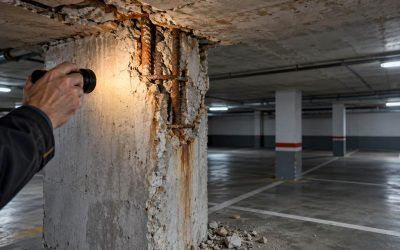
Structural Damage and Building Pathologies: What They Are, Examples and How to Claim Against the Building Contractor or Developer
A crack that widens every winter, a door that suddenly no longer closes, a floor slab that sags or a garage with spalling concrete and exposed reinforcement. Behind many of these symptoms lie structural damage and building pathologies: defects that originate in the...

Building contractor ordered to pay over €25,000 for defective flooring in a home
The Civil Division of the Court of First Instance of Jaén (Tribunal de Instancia, Plaza nº 3) has handed down Judgment no. 396/2026, dated 29 September 2026, fully upholding the claim brought by the owners of a home against the building contractor responsible for the...
DON’T HESITATE TO CONSULT US!
CUSTOM BUDGETS

0 Comments