
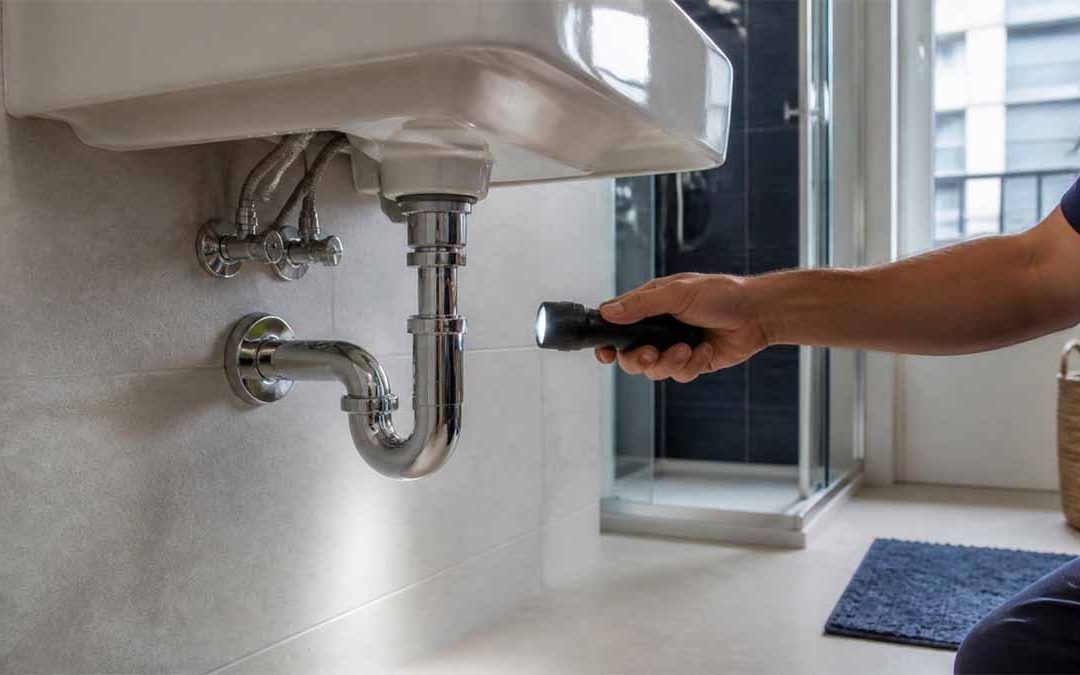
A sewage smell at home is one of the most unpleasant problems a property can have. It causes real concern because it is seen as something difficult to fix. That is not quite the case, but when it appears in the bathroom, in the kitchen or next to the washing machine, and comes and goes for no apparent reason, it is impossible not to worry about it. These drain smells permeate everything and, of course, a healthy home environment, which is generally a priority for every person and family, becomes impossible.
We have to say that, in most cases, drain smells have a simple cause, such as a dry or dirty trap, which we can sort out ourselves in a few minutes, so there is no need to panic every time it happens. The solution may be very simple.
However, if we have just bought a new-build home and have this problem, everything would suggest a design or workmanship fault in the drainage system behind it. In that case, we could claim against the building contractor or the developer.
At DPcon we explain it all below.
Why does my home smell of sewage?
Every home is connected to the sewer network (or to a septic tank) through a wastewater drainage system: fixture waste outlets, traps, branch pipes, downpipes, collector drains and inspection chambers. Gases from the decomposition of organic matter are generated in that system, mainly hydrogen sulphide, which is responsible for the characteristic smell of rotten eggs, along with methane and ammonia.
To stop these gases getting into the home, the installation is designed with two barriers: water seals (the water retained in traps and drum traps, which acts as a plug) and a ventilation system that balances the pressure inside the pipes and expels the gases above the roof. When either of them fails, the sewage smell reaches the home.
The most common causes of drain smells
There can be several, but they are generally well identified and we know how they can be mitigated. But of course, if our home is new, we may be looking at construction damage in the form of these bad smells. We will explain this further below.
As for the most common causes, make a note of the following:
☑️ Dry trap or trap with little water
This is the number one cause. If a washbasin, shower, terrace gully or bidet is not used for weeks, the water in the trap evaporates and the pipe is left open to the system. It is typical of second homes, guest bathrooms and recently handed-over homes that have been closed up for some time. The solution is as simple as running the water for a few seconds.
☑️ Dirty traps and drum traps
Traces of soap, hair, grease and food build up on the walls of the trap and drum trap and decompose. In this case the smell tends to be localised (a washbasin, the kitchen sink, the shower tray) and improves after cleaning.
☑️ Loss of the water seal through siphonage
When the system is not properly ventilated, flushing the cistern or draining the washing machine creates negative pressure in the pipes that “sucks” the water out of nearby traps (self-siphonage or induced siphonage). If you hear gurgling in the washbasin or shower when you flush the toilet, followed by a bad smell, this is a clear clue.
☑️ Downpipes with no primary ventilation or poor ventilation
The downpipes (the vertical pipes that collect the water from all floors) must extend above the roof to ventilate the system. If the ventilation has been removed, is blocked, ends in an unsuitable place or has been replaced by air admittance valves that are undersized, faulty or badly positioned, the gases find their way out through the traps in the homes. This is a very common defect in new builds and usually affects several homes in the same building.
☑️ Badly sealed joints and leaks in the system
Badly glued pipe connections, toilet connector pipes without the correct seal, badly sealed wall-hung toilets or downpipes with open joints inside service shafts and false ceilings let gases escape even if the traps are working properly. The smell is usually noticeable in wardrobes, false ceilings or next to access panels.
☑️ Incorrect falls, excessively long branch pipes and fixtures with no trap
If the horizontal branch pipes do not have the proper fall, water and waste stagnate and ferment. Other sources of smells are traps installed in series, fixtures connected without a trap and drum traps serving fixtures in another room, practices that are expressly prohibited by the Technical Building Code.
☑️ Inspection chambers, collector drains and connection to the main sewer
In detached houses, ground-floor properties and garages, the sewage smell may come from inspection chambers without an airtight cover, dry trapped chambers, or buried collector drains that are broken or have reverse falls, or from a faulty connection to the municipal sewer. It can also come from poorly ventilated septic tanks.
☑️ Waste outlets from household appliances and air-conditioning equipment
A washing machine, dishwasher or air-conditioning condensate tray connected directly to the system without a trap or anti-backflow bend provides a direct route for the gases. This is a common mistake in new installations.
| Symptom | Likely cause | Who should fix it? |
|---|---|---|
| Smell from a fixture that is not used | Dry trap | The owner (use and maintenance) |
| Localised smell that improves with cleaning | Dirty trap or drum trap | The owner (maintenance) |
| Gurgling when the cistern is flushed, followed by a smell | Siphonage due to poor ventilation | Building contractor/developer if it is a new build; homeowners’ association if the downpipe is affected |
| Smell in several rooms or on several floors | Downpipe with no primary ventilation or faulty valve | Building contractor/developer (new build) or homeowners’ association |
| Smell in wardrobes, false ceilings or service shafts | Badly sealed joints or connections | Building contractor/developer (new build) |
| Smell on the ground floor, in the garden or in the garage | Inspection chambers, collector drain or sewer connection | Building contractor/developer, homeowners’ association or town council, depending on the section |
How to get rid of drain smells step by step
Although at DPcon we are not the ones who fix the problem of bad smells in the home, before thinking about a claim it is advisable to rule out causes related to use and maintenance.
The first thing to do is refill all the traps: run the taps of washbasins, bidets, showers, baths and sinks for 10-15 seconds and pour a bucket of water into the gullies on terraces, in utility rooms and in garages. If the smell disappears within a few hours, the problem was a dry trap.
We can dismantle the trap under the washbasin or sink (with a bucket underneath) and clean it. In showers, remove the drain grille and clear away hair and debris. Open the bathroom drum trap, if it is accessible, and clean it.
Next, carry out maintenance cleaning. Once a week, pour very hot water (not boiling if the pipes are PVC) down the drains. The classic bicarbonate of soda and vinegar helps to loosen organic residue, but it does not resolve ventilation faults or leaks.
It is wise to check the household appliances. Make sure that the hose of the washing machine and dishwasher drains into a trap and has the anti-backflow bend. Check joints and seals, and inspect the silicone at the base of the toilet and shower trays and the condition of the access panels.
Finally, if the smell persists, we would advise you to contact a professional immediately. A plumber can carry out a smoke test or a camera inspection to locate leaks, reverse falls or breaks. If the home is new, at that point the recommended step is an expert report to determine whether there is a construction defect.
How to get rid of a bad smell from downpipes
As before, although this is not our area of work, we do know that when the smell comes from the downpipe (it is noticeable in several rooms, in the service shaft or in several homes in the building), home remedies do not really work. The problem is not in the trap but in the ventilation or the airtightness of the downpipe itself.
What solutions are there? Check the primary ventilation on the roof. Make sure that the downpipe comes out above the roof, that it is not covered (nests, rubble, unsuitable cowls) and that it was not cut during the works.
We would then try the following:
- Replace or install air admittance valves suited to the flow rate and in the correct position, or install secondary ventilation where the building requires it.
- Seal the joints and connections of the downpipe and the toilet connector pipes that join it.
- Inspect with a camera or smoke test to locate breaks, disconnections or blockages.
As a general rule, downpipes are communal areas of the building. If we live in a flat, the repair falls to the homeowners’ association and, if the building is new, the association can claim for the construction defect against the developer and the building contractor.
Are bad smells in a new home a construction defect?
Yes, in many cases. A new-build home should not smell of sewage if the drainage system has been properly designed and built and is used normally. When the smell appears despite correct use, we are dealing with a failure to meet the building’s health and hygiene requirements, which the law regards as a habitability defect.
What the Technical Building Code says (CTE DB HS 5)
Section HS 5 “Evacuación de aguas” (Wastewater Drainage) of the CTE Basic Document on Health and Hygiene regulates what building drainage systems must be like. Among other requirements:
- There must be water seals that prevent the air contained in the system from passing into occupied spaces.
- The minimum height of the water seal must be 50 mm for continuous use and 70 mm for intermittent use, with a maximum of 100 mm.
- Traps must not be installed in series, and a drum trap may not serve fixtures located outside the wet room in which it is installed.
- Wastewater downpipes must have primary ventilation and extend at least 1.30 m above the roof if it is not accessible (2 m if it is accessible). In buildings above a certain height, secondary or tertiary ventilation is also required.
- Systems must be accessible for maintenance, either exposed or in shafts and service ducts with access panels.
DB HS 5 itself also sets out maintenance obligations for the user, such as keeping gullies, drum traps and traps filled with water to prevent drain smells and that sewage smell around the home. That is why a good expert report must distinguish whether the smell comes from a defect in the installation or from a lack of use or maintenance, which is the argument building contractors usually put forward to reject a claim (we explain this in lack of maintenance as grounds for rejecting damage).
What the Spanish Building Act (LOE) says
The Spanish Building Act (Law 38/1999, Ley de Ordenación de la Edificación, LOE)sets out in article 3 the basic requirements that buildings must meet. Those relating to habitability include hygiene, health and environmental protection, which requires acceptable standards of indoor health and hygiene and proper waste disposal. Bad smells from a home’s drainage system directly breach this requirement.
Under article 17 of the LOE , the parties involved in the construction (developer, building contractor, designer, works director, site manager) are liable to the owners for material damage to the building, counted from the date of handover of the works:
| Guarantee period | Type of defect | Does it include bad smells? |
|---|---|---|
| 10 years | Defects affecting the structure (foundations, columns, beams, floor slabs) that compromise strength and stability | No, unless there is associated structural damage |
| 3 years | Defects in construction elements or installations that fail to meet the habitability requirements (article 3.1.c): health and hygiene, watertightness, noise, energy saving | Yes. This is the typical case for drain smells in pipes and downpipes |
| 1 year | Workmanship defects affecting finishing elements or finishes (liable party: the building contractor) | Only if it is a minor finish (e.g. the seal of a fixture) |
Very important: the 10, 3 and 1-year periods are guarantee periods, in other words, the time within which the defect must become apparent . Once it has appeared, article 18 of the LOE grants 2 years from the date the damage occurs to bring the action. We go into this further in the LOE periods are guarantee periods.
Other compatible legal routes
- Contractual liability towards the developer (articles 1101 and 1124 of the Civil Code): for breach of the sale and purchase contract by handing over a home that does not comply with what was agreed or with the regulations. The general limitation period is 5 years (article 1964 of the Civil Code).
- Consumer legislation (Royal Legislative Decree 1/2007, TRLGDCU): a person who buys a home from a professional developer is considered a consumer.
- Latent defects (articles 1484 et seq. of the Civil Code) if it is a second-hand home and the defect existed and was concealed at the time of sale; the period is only 6 months from delivery. More information in is it worth taking action over latent defects?
How to claim for bad smells in your new home
If we have ruled out a problem of use and the sewage smell at home persists, we should claim against the building contractor or the developer. How? At DPcon we explain it in detail:
1️⃣ Document the problem
Note down dates, the rooms affected and the circumstances (when flushing the cistern, in windy weather, when using the washing machine). Take photos and videos and, if several neighbours are affected, gather their statements.
2️⃣ Notify the developer in writing
And the building contractor too if we know who it is, by burofax (formal registered letter) or by recorded delivery with acknowledgement of receipt. This establishes the date on which you reported the defect and also interrupts the limitation period.
3️⃣ Allow access for inspection and repair
But do not sign any statement of acceptance without advice. Remember that a repair agreement does not release them from liability if the problem is not resolved.
4️⃣ Commission an independent expert report
A building expert will determine the technical origin of the smell (ventilation, joints, traps, falls), the breaches of the CTE, the appropriate solution and its cost. It is the key evidence in any negotiation or trial.
5️⃣ Try to reach an out-of-court solution
With the expert report in hand, many developers agree to repair or pay compensation.
6️⃣ File a lawsuit if there is no agreement
Within the periods set by the LOE and the Civil Code. The action can be brought jointly against the developer, the building contractor and the technical professionals, who are jointly and severally liable when fault cannot be individually attributed.
If the problem affects communal areas
When the source of the drain smells and of that sewage smell throughout the home lies in the downpipes, the roof ventilation or the shared collector drains, the party that must claim is the homeowners’ association. It must do so following a resolution of the owners’ meeting, through its president. Each owner may also claim for the damage suffered in their own home.
It is quite possible for the same defect to appear in several flats in the same vertical column, which undoubtedly strengthens the claim.
Frequently asked questions about drain smells
We finish with a selection of some of the most common questions we receive at our office, which will no doubt help you to better understand the ins and outs of drain smells:
☑️ Why does my home smell of sewage?
Because gases from the drainage system are getting into the home. The most common causes are a dry or dirty trap, loss of the water seal due to a lack of ventilation in the system, downpipes with no primary ventilation, badly sealed joints or appliances connected without a trap.
☑️ How can I get rid of drain smells?
Fill all traps and gullies with water, clean traps and drum traps, pour hot water down the drains every week and check the waste outlets of the washing machine and dishwasher. If the smell returns, the problem lies in the installation and requires a professional inspection.
☑️ How can I get rid of a bad smell from downpipes?
By checking that the downpipe has primary ventilation above the roof and is not blocked, installing or replacing the air admittance valves and sealing the joints. As it is a communal element, the repair falls to the homeowners’ association or, if the building is new, to the developer and the building contractor.
☑️ Why does the bathroom smell of sewage when I flush the toilet?
Normally because flushing the toilet empties nearby traps by suction (siphonage) due to insufficient ventilation of the system. It is a typical symptom of a design or workmanship defect.
☑️ Is a sewage smell in a new home a construction defect?
Yes, if it appears with normal use. It breaches the hygiene and health requirement of article 3 of the LOE and the requirements of CTE DB HS 5, and is considered a habitability defect with a 3-year guarantee from the handover of the works.
☑️ How long do I have to claim against the building contractor for bad smells?
The defect must become apparent within 3 years of the handover of the works (article 17 of the LOE) and, once it appears, you have 2 years to claim (article 18 of the LOE). In addition, a contractual action can be brought against the developer, with a period of 5 years.
☑️ Who do I claim against, the developer or the building contractor?
Both. The developer is always liable to the buyer, and the building contractor for workmanship defects. If liability cannot be individually attributed, all the parties are jointly and severally liable.
☑️ Do I need an expert report to claim for bad smells?
It is highly recommended. The expert report identifies the technical origin of the smell, proves the breach of regulations, rules out a lack of maintenance and values the repair, all of which is decisive both in negotiations and at trial.
☑️ What if the home is second-hand?
You can claim against the seller for latent defects if the defect existed when you bought the home and was not visible, but the period is only 6 months from delivery. If the building is less than 3 years old, a claim under the LOE against the parties involved in the construction may also be possible.
Conclusions
Living with a constant bad smell at home, especially if we have just bought a new-build property, is really unpleasant. It is also unpleasant if we have been living in the home for years, of course, but when the purchase is new, the problem is hard to understand. And rightly so. Smells from pipes are unpleasant, and we have now learned what causes them, as well as the home remedies.
However, in many cases only a professional can fix it and, if we own a recently purchased home (less than 3 years since completion of the works), we may well have the option of making a claim, as it is a defect in the drainage installation.
At DPcon we have obtained numerous favourable judgments for habitability defects of this kind in new builds: drain smells that make the whole home smell of sewage.
Thanks to our team of professionals, which combines technical expertise and legal advice specialising in construction defects, we achieve successful claims against developers and/or building contractors for our clients. Tell us about your case and we will analyse it from our technical perspective. Contact us.
WhatsApp: 646 567 732
Related articles
Structural Damage and Building Pathologies: What They Are, Examples and How to Claim Against the Building Contractor or Developer
A crack that widens every winter, a door that suddenly no longer closes, a floor slab that sags or a garage with spalling concrete and exposed reinforcement. Behind many of these symptoms lie structural damage and building pathologies: defects that originate in the...
Building contractor ordered to pay over €25,000 for defective flooring in a home
The Civil Division of the Court of First Instance of Jaén (Tribunal de Instancia, Plaza nº 3) has handed down Judgment no. 396/2026, dated 29 September 2026, fully upholding the claim brought by the owners of a home against the building contractor responsible for the...

Claiming for Cracks in Your Home: These Are Your Options
A crack in the living-room wall, a diagonal hairline crack next to a door that no longer closes properly, or a façade that is starting to open up. Sound familiar? In many homes they are part of the building and, naturally, the first reaction is usually concern,...
DON’T HESITATE TO CONSULT US!
CUSTOM BUDGETS

0 Comments