
Don’t bring two lawsuits over the same thing

More than once, clients have asked us to bring a second lawsuit because the first one, brought by other professionals, although won, turned out to be “insufficient”: not all the damage was claimed, or not all of it was established at the first trial, and/or the judges awarded little…
Be very careful with this, because it is a trap that not only lawyers but also property administrators or presidents of homeowners’ associations can fall into; acting in good faith (though not without ignorance), they can bring real and utter ruin on the client or the association they manage, with this second lawsuit being lost entirely and an order to pay legal costs.
There is a basic principle of law, namely legal certainty, which holds that matters already decided cannot be endlessly reopened.
If a matter, issue or case has been decided and there is a judgment, that judgment prevents a new lawsuit on the same thing from being brought before the court again. The matter already decided bars the way to the second.
But it is also true that res judicata does NOT apply when, in the first proceedings, not all the factual possibilities of the case were exhausted, or when some later, unforeseen element foreign to the judgment has arisen. Consequently, it does not exist where that possibility arises, and later proceedings that complement the earlier ones do not breach the principle of “non bis in idem”, that is, judging the same thing twice.
But note that the factual possibilities of the first case must have been exhausted. And this subtle distinction is what can be confused or misunderstood. Let us explain:
If in the first lawsuit something was not claimed that could have been claimed (and it is not something later, unforeseen or foreign), then even though it was not decided in the first lawsuit, the plea of res judicata also applies. (See, among others, Supreme Court judgment 862/2000 of 30 September)
Imagine a building or housing complex whose foundations fail, and a lawsuit is filed over the failures (differential settlement), claiming the repair of the foundations. The case is won, and the architects are ordered to repair the foundations. But then someone realises that the damage to the private elements of the homes (hairline cracks, cracks, paintwork, doors out of true) caused by the foundation failures was left out, forgotten and not claimed, and now they want to bring another lawsuit to include and claim for it. It seems that the subject matter is not the same, since the damage in the first lawsuit is different, and of a different amount, from that in the second. But it can no longer be claimed.
Why? Because, although the damage is different, it could have been claimed in the first lawsuit, and it was not. And note that it has to have “arisen later and been unforeseen”; yet that damage had already arisen, or was foreseeable.
All this without thinking further, and more cynically, that what was intended was to influence the second judge hearing the second case with the first judgment; and/or, as well as playing safer (there is already a judgment in the first case pushing the ruling in the second), the amounts have been minimised across two lawsuits, reducing the risk of losing on the total amount in a single lawsuit.
So let us ask homeowners’ associations, or clients in general, for background or information on whether previous presidents claimed for damage in the past, and, if in doubt: good sense and prudence. Ask us if you have any questions.
www.dpcon.es
Related articles

Drain smells and home drainage systems: why your home smells of sewage and how to claim if it is a new build
A sewage smell at home is one of the most unpleasant problems a property can have. It causes real concern because it is seen as something difficult to fix. That is not quite the case, but when it appears in the bathroom, in the kitchen or next to the washing machine,...
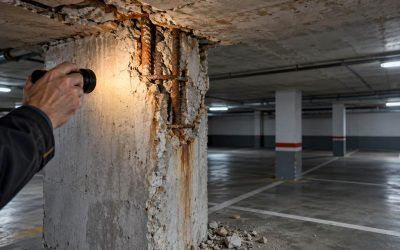
Structural Damage and Building Pathologies: What They Are, Examples and How to Claim Against the Building Contractor or Developer
A crack that widens every winter, a door that suddenly no longer closes, a floor slab that sags or a garage with spalling concrete and exposed reinforcement. Behind many of these symptoms lie structural damage and building pathologies: defects that originate in the...
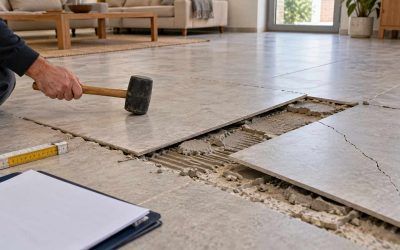
Building contractor ordered to pay over €25,000 for defective flooring in a home
The Civil Division of the Court of First Instance of Jaén (Tribunal de Instancia, Plaza nº 3) has handed down Judgment no. 396/2026, dated 29 September 2026, fully upholding the claim brought by the owners of a home against the building contractor responsible for the...
DON’T HESITATE TO CONSULT US!
CUSTOM BUDGETS

0 Comments