
What the Building Logbook contains

Under article 7 of the Spanish Building Act (Ley de Ordenación de la Edificación, LOE), the developer is obliged to compile and hand over the Building Logbook (Libro del Edificio) to its end users. The Building Logbook is the key document for owners when it comes to holding parties liable for construction defects in their property. But what does it contain? It contains all the written and graphic documents that record the history of the building, so that its owners are aware of it and can maintain it afterwards; the file and record of its history of technical, legal and administrative incidents; and the data and instructions needed for its proper use, so that maintenance can be carried out along with later repair, refurbishment or renovation works, and to prove that users have met their obligations in order to facilitate, where appropriate, the determination of liability or the granting of public aid.
It must comprise:
- Updated Building Project, with the Execution Project, its amendments, reports, drawings and final cost. All of it stamped (visado) by the professional association and prepared by the Works Director (Architect).
- Handover certificate Certificate signed by the Developer and the Contractor (at least). It includes: the parties involved, the date of the Certificate of Completion, the final cost and the Contractor’s guarantee
- List identifying the parties involved in the construction process. This sets out a detailed list of the parties involved in the construction process in the development, design, management, supervision, supply and execution of the works, with the details needed to locate and identify them
- Instructions for use and maintenance. The instructions must comply with the Technical Building Code (CTE) and other applicable regulations, and include a building maintenance plan scheduling the programmed maintenance operations for the building and its installations
- On-site acceptance control of the products, equipment and systems incorporated into the works. Its purpose is to check that the technical characteristics of the products, equipment and systems supplied meet the requirements of the project
- Certificate of completion. Certificate signed by the site management team (the Works Director and the Site Manager)
- Other documents such as: the subcontracting book, energy performance certificate, authorisations for thermal installations, the homeowners’ association deed and bylaws, licences, installation certificates, insurance policies, list of utility companies, etc.
All these documents are essential for the owner when claiming for the construction defects existing in their building, because through them, as key information, we will know whether we are within the guarantee periods and whether or not we can hold the various parties involved in the construction liable.
Related articles

Drain smells and home drainage systems: why your home smells of sewage and how to claim if it is a new build
A sewage smell at home is one of the most unpleasant problems a property can have. It causes real concern because it is seen as something difficult to fix. That is not quite the case, but when it appears in the bathroom, in the kitchen or next to the washing machine,...
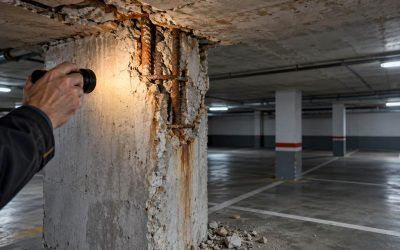
Structural Damage and Building Pathologies: What They Are, Examples and How to Claim Against the Building Contractor or Developer
A crack that widens every winter, a door that suddenly no longer closes, a floor slab that sags or a garage with spalling concrete and exposed reinforcement. Behind many of these symptoms lie structural damage and building pathologies: defects that originate in the...
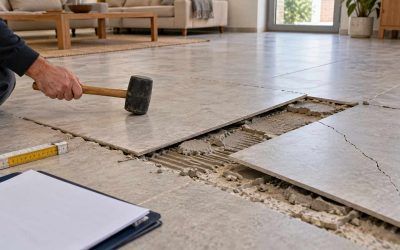
Building contractor ordered to pay over €25,000 for defective flooring in a home
The Civil Division of the Court of First Instance of Jaén (Tribunal de Instancia, Plaza nº 3) has handed down Judgment no. 396/2026, dated 29 September 2026, fully upholding the claim brought by the owners of a home against the building contractor responsible for the...
DON’T HESITATE TO CONSULT US!
CUSTOM BUDGETS

0 Comments