
Non-compliant sound insulation

I can hear my neighbours, the lift, the installations, the downpipes, etc. far too much, and I think our partition walls do not meet the legal sound insulation requirements.
The LOE sets out the basic requirements that new-build homes must meet to guarantee people’s safety and comfort.
Among the mandatory habitability requirements is the basic requirement of “Protection against noise”, which consists of limiting, within buildings and under normal conditions of use, the risk of nuisance or illness that noise may cause to users as a result of the characteristics of the building’s design, construction, use and maintenance.
To meet this objective, buildings shall be designed, built and maintained so that the building elements forming their rooms have suitable acoustic characteristics to reduce the transmission of airborne noise, impact noise, and noise and vibration from the building’s own installations, and to limit reverberant noise in the rooms (Article 14 of the CTE).
This is why the Technical Building Code sets out the basic requirements that buildings must meet to provide this protection against noise.
These are general conditions and extensive basic documents that set out both the minimum sound insulation requirements for each wall depending on the type of property and, within it, whether it is a habitable room, protected room, activity room, plant room, communal area, etc., as well as the procedure for checking them.
In most cases, the airborne sound insulation of a room in a home cannot be less than 50 dBA.
Besides walls having poor sound insulation, there may be cases where they were not built properly or the appropriate insulating materials were not even installed (polyurethane foam, rock wool, glass fibre, cork, etc.), or where so-called acoustic bridges connecting with adjacent homes were not avoided, such as gaps in walls or floor slabs, downpipes, ventilation shunts, switch boxes, junction boxes and electrical panels.
If you believe that these minimum noise protection requirements have not been respected in your new-build building, and you can hear the downpipes, your neighbours’ conversations and even the faintest sounds, contact us for a quote so that an expert can visit your building and carry out the relevant tests with sound level meters, open an inspection hole to check whether or not this essential habitability requirement is met, and, where appropriate, claim against those responsible.
Related articles
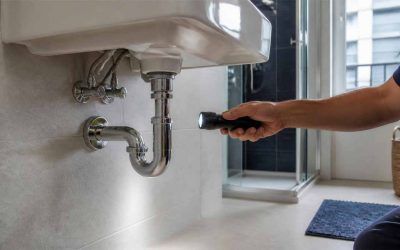
Drain smells and home drainage systems: why your home smells of sewage and how to claim if it is a new build
A sewage smell at home is one of the most unpleasant problems a property can have. It causes real concern because it is seen as something difficult to fix. That is not quite the case, but when it appears in the bathroom, in the kitchen or next to the washing machine,...
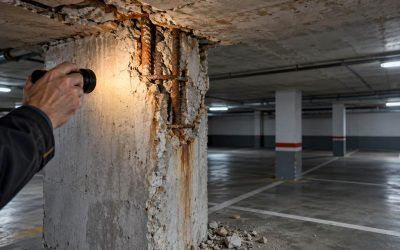
Structural Damage and Building Pathologies: What They Are, Examples and How to Claim Against the Building Contractor or Developer
A crack that widens every winter, a door that suddenly no longer closes, a floor slab that sags or a garage with spalling concrete and exposed reinforcement. Behind many of these symptoms lie structural damage and building pathologies: defects that originate in the...
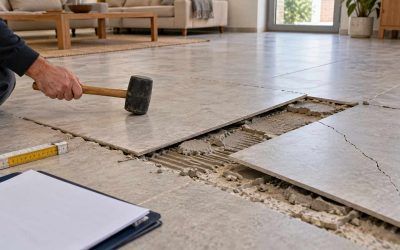
Building contractor ordered to pay over €25,000 for defective flooring in a home
The Civil Division of the Court of First Instance of Jaén (Tribunal de Instancia, Plaza nº 3) has handed down Judgment no. 396/2026, dated 29 September 2026, fully upholding the claim brought by the owners of a home against the building contractor responsible for the...
DON’T HESITATE TO CONSULT US!
CUSTOM BUDGETS

0 Comments