
Investigating and claiming for building pathologies

Investigating and claiming for building pathologies, explained to a trainee.
It is hard to teach a trainee about life, about what is done in a trade, job or profession. But I had an idea for “explaining it” to a recent graduate we had with us, because his father was a doctor. So I told him that we do what his father, the doctor, does (forgive us, this is not a true comparison; we recognise that doctors work with what is most precious, health and life). But it helps to understand. You see: when a patient visits your father, the patient gives him a few clues about what hurts, how intense the pain is and where it is.
Your father notes the patient’s age: about 50, he thinks. No longer young. Or, on the contrary, he thinks the patient is too young to have what he is suffering from. He starts to assess.
We listen to the owner of the building or house and what they are complaining about: that the property has cracks, that it is far too cold, that there is damp and water ingress in the basements, or that there are problems with access to the garages, with very sharp or narrow bends and hellish slopes to reach the parking spaces, or spaces too small to park the car; and we also ask how old the building is.
But what the patient says is not enough for your father; he has to examine him, touch him, listen to his chest. So do we. We go to see the building, check that what we have been told is true and see whether there are other things the owner has not told us. Or we rule out information or damage that is not important. We take photographs and put a face to the sick building.
Next, your father sends the patient for tests of every kind: blood counts, glucose, cholesterol, sediment, antigens, an ultrasound and, if necessary, an MRI or a CT scan.
Based on the results, your father rules out the diagnoses that cannot possibly apply and focuses on those that the tests suggest are possible. The circle starts to close. There may be several causes, two, or just one.
We install crack monitors, or measure the building’s tilt and level with a laser, take photographs of what we see with ordinary cameras, and with thermographic cameras of what cannot be seen with the naked eye; we chemically analyse any water that appears, study the project and the geotechnical survey that was carried out, and compare what was built with what was designed: what the building should have and does not have, or what should have been done according to the project and was not.
For the damage that is confirmed, we determine whether it is the fault of the architect, the quantity surveyor or the building contractor (since the developer is almost always jointly and severally liable), and whether, given the age of the construction, any of them can still be held liable.
We classify the damage as serious or minor and check whether the period for claiming is 10 years, 3 years, 1 year or six months. The circle closes and only the damage that can be claimed remains.
Then, in your father’s case, with all the information he decides to act: he prescribes treatment for the patient’s illness, or operates straight away, to cure the patient.
And we, on the basis of the damage, already set out in an expert report, and provided it has not expired or become time-barred, fit that damage within the LOE or the Civil Code and file a lawsuit so that those responsible are held liable and the damage is put right.
As simple and, at the same time, as complicated as that. That is indeed the storyline; but as things go, many are resolved, and others unfortunately become complicated, although they get sorted out. And in others, nothing at all can be done any more.
That’s life.
Related articles
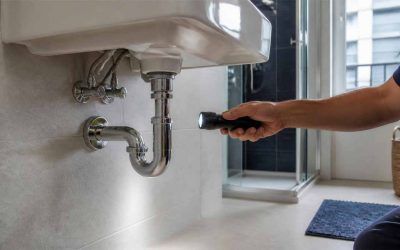
Drain smells and home drainage systems: why your home smells of sewage and how to claim if it is a new build
A sewage smell at home is one of the most unpleasant problems a property can have. It causes real concern because it is seen as something difficult to fix. That is not quite the case, but when it appears in the bathroom, in the kitchen or next to the washing machine,...
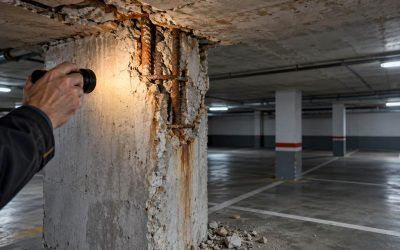
Structural Damage and Building Pathologies: What They Are, Examples and How to Claim Against the Building Contractor or Developer
A crack that widens every winter, a door that suddenly no longer closes, a floor slab that sags or a garage with spalling concrete and exposed reinforcement. Behind many of these symptoms lie structural damage and building pathologies: defects that originate in the...
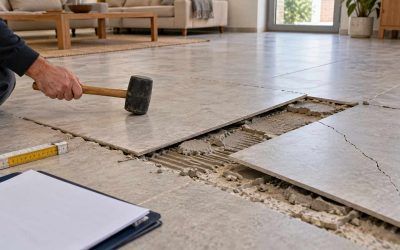
Building contractor ordered to pay over €25,000 for defective flooring in a home
The Civil Division of the Court of First Instance of Jaén (Tribunal de Instancia, Plaza nº 3) has handed down Judgment no. 396/2026, dated 29 September 2026, fully upholding the claim brought by the owners of a home against the building contractor responsible for the...
DON’T HESITATE TO CONSULT US!
CUSTOM BUDGETS

0 Comments