
Taifa kingdoms

Long before present-day Spain had a central government (at least for the time being) with its Prime Minister, and the autonomous regions with theirs, Spain had worse precedents, as there were periods of even greater anarchy and independence during the 11th century, in the so-called taifa kingdoms, when the Caliphate of Córdoba was abolished (yes, yes, like the one there is now between Syria and Iraq, but in the year 1031, and more refined) and nine caliphs of the Umayyad dynasties followed one another amid total anarchy, reflected in the gradual independence of the taifas of Almería, Murcia, Alpuente, Badajoz, Denia, Granada, Huelva, Toledo, Tortosa, Valencia, Zaragoza and a few other places. That is why, in Spain, when a situation is chaotic and anarchic and petty kings and/or lots of third-rate figures are in charge, people say: this is a taifa kingdom.
Sometimes in our own buildings, given these precedents, we do not want to go without such kingdoms either. Indeed, there is a Main Homeowners’ Association with its President, and Sub-associations (autonomous regions or taifa kingdoms), each with its delegate or president, also known as the president of the “block entrance”. But make no mistake: they do not work like the taifa kingdoms.
Although the Bylaws authorise the formation of “sub-associations”, they do not usually mention what powers these may have within those that legally belong to the general homeowners’ association. This leads to many misunderstandings, because the current president of the block believes he represents his sub-association as if it were an autonomous region or taifa kingdom. But nothing could be further from the truth.
To begin with, they are not presidents of their block but committee members for each of the sub-associations, that make up the homeowners’ association or development, just as there may be a committee member for the garage and storage rooms, or one for the commercial premises, but always with a President, a Vice-President and a Secretary-Administrator.
But the Horizontal Property Act works as in the USA, in that only The President holds the legal representation of the Association, and only the President may call meetings of the Governing Board and the Owners’ Meeting and exercise all the other powers specified in the Horizontal Property Act.
The functions of the committee members for each of the “ sub-associations“, are limited to representing the owners belonging to each of them on the Governing Board, but not to representing them in court or before third parties.
The sub-association’s committee member does not represent any homeowners’ association and, as a committee member (not president), does not even have the power to represent his own “sub-association” in court, since that belongs only to the President of the homeowners’ association.
Not even as a mere owner would he have standing to sue, as was the case in the past, when he acted with the consent, and/or without the express or tacit opposition, of the homeowners’ association.
Before Civil Procedure Act (LEC) 1/2000, any co-owner could defend the general interests, but now, with article 7.6 in force, only those to whom the law grants representation may appear in court, which means exclusively the President or, where applicable, the Vice-President acting in his place.
Article 7.6 is categorical: as regards appearance in court and representation, it provides that “the entities without legal personality referred to in point 5 of paragraph 1 of the previous article (a homeowners’ association) shall appear in court through the persons to whom the law, in each case, attributes the representation in court of such entities“; which is none other than the President of the homeowners’ association.
The Caliphate was abolished 10 centuries ago.
www.dpcon.es
Related articles
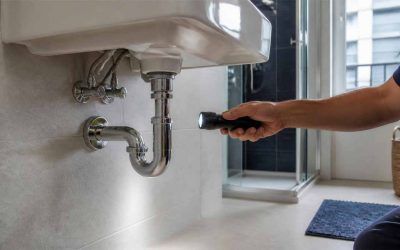
Drain smells and home drainage systems: why your home smells of sewage and how to claim if it is a new build
A sewage smell at home is one of the most unpleasant problems a property can have. It causes real concern because it is seen as something difficult to fix. That is not quite the case, but when it appears in the bathroom, in the kitchen or next to the washing machine,...
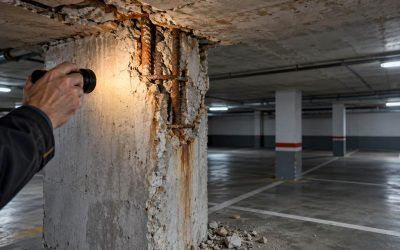
Structural Damage and Building Pathologies: What They Are, Examples and How to Claim Against the Building Contractor or Developer
A crack that widens every winter, a door that suddenly no longer closes, a floor slab that sags or a garage with spalling concrete and exposed reinforcement. Behind many of these symptoms lie structural damage and building pathologies: defects that originate in the...
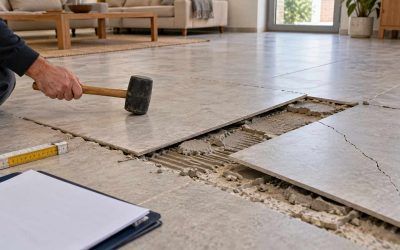
Building contractor ordered to pay over €25,000 for defective flooring in a home
The Civil Division of the Court of First Instance of Jaén (Tribunal de Instancia, Plaza nº 3) has handed down Judgment no. 396/2026, dated 29 September 2026, fully upholding the claim brought by the owners of a home against the building contractor responsible for the...
DON’T HESITATE TO CONSULT US!
CUSTOM BUDGETS

0 Comments