
Bad odours in bathrooms and the Aqueduct of Segovia

To prevent the unhealthy, constant presence of sewage odours in bathrooms, you need to look at how the fittings have been installed, because it is precisely the poor way in which they have been installed that causes these unbearable odours; so the falls of the waste pipes of the sanitary fittings must be corrected, and proper bottle traps must be installed correctly. The trap, dear friend, is a wonderful invention. Let us explain.
The problem you are suffering from is not a rare one; unfortunately many users suffer from it, since bathrooms often have bad odours attributable to defects in the waste pipes of the sanitary fittings. How are they corrected? By doing as the Romans did, who were masters of handling gravity and siphons.
With the help of a trusted, experienced plumber (perhaps, if he is descended from the Romans, it will be in his genes), you should check that the waste from toilets, slop sinks and squat toilets always runs directly into the downpipe. The steeper the fall, the more gravity, the better.
And the waste from kitchen sinks, utility sinks and pumped appliances must have an individual trap. The distance from the bottle trap to the downpipe must not exceed 1 m. The distance from the furthest fitting to the bottle trap must not exceed 2.5 m. And the distance from the furthest trap to the downpipe must not exceed 2 m.
We have sometimes seen toilet waste pipes that run for up to 2 m to reach the downpipe on the attic floor, a run which, together with the current situation of some toilets discharging independently, reveals the incorrect fall of the waste pipes.
We have also found in some homes that the bathroom bottle traps do not form a water seal to prevent odours escaping, because the water does not completely cover the waste outlets. That is the botched work done nowadays.
So now you know that good gravity and traps are the principles that must prevail in your bathroom, and it is in the waste pipes of washbasins and toilets that they perform their greatest function, preventing the foul smell of rotting matter in the sewers from coming out through the plugholes of those fittings. But do not think these inventions are only useful for that prosaic function, or that they are a recent invention. The Aqueduct of Segovia, or those of Terrassa or Mérida, the ones in France and Italy and, in short, all Roman aqueducts are based on those two principles: gravity and the U-shaped inverted siphon, which, as well as enhancing the landscape and giving a sense of grandeur, are today a source of tourism. Of the cultured people who travel to where they still stand in order to admire them, not all understand the keys to their science (the different heights, gravity and siphons) but only look at the stones, and at the place where they are going to eat roast suckling pig afterwards.
Related articles
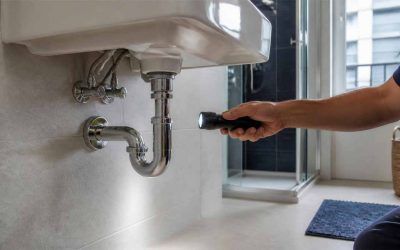
Drain smells and home drainage systems: why your home smells of sewage and how to claim if it is a new build
A sewage smell at home is one of the most unpleasant problems a property can have. It causes real concern because it is seen as something difficult to fix. That is not quite the case, but when it appears in the bathroom, in the kitchen or next to the washing machine,...
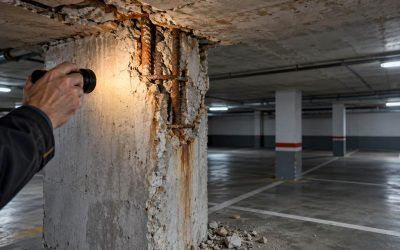
Structural Damage and Building Pathologies: What They Are, Examples and How to Claim Against the Building Contractor or Developer
A crack that widens every winter, a door that suddenly no longer closes, a floor slab that sags or a garage with spalling concrete and exposed reinforcement. Behind many of these symptoms lie structural damage and building pathologies: defects that originate in the...
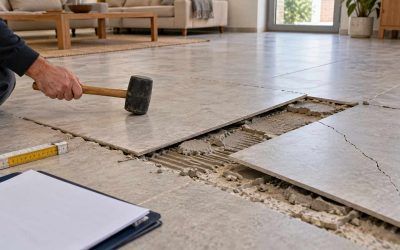
Building contractor ordered to pay over €25,000 for defective flooring in a home
The Civil Division of the Court of First Instance of Jaén (Tribunal de Instancia, Plaza nº 3) has handed down Judgment no. 396/2026, dated 29 September 2026, fully upholding the claim brought by the owners of a home against the building contractor responsible for the...
DON’T HESITATE TO CONSULT US!
CUSTOM BUDGETS

0 Comments