
What happens if the recommendations of the Technical Building Code were not followed on a building project?

Can a party involved in the construction be sued merely because the building does not comply with the CTE?
The Technical Building Code (CTE), which came into force in Spain in 2006, is very extensive. It regulates everything, or almost everything, in construction matters and sets out how buildings must be built, both technically and in terms of regulations. Within the Technical Building Code there are sets of rules grouped into Basic Documents (Documentos Básicos) on safety and habitability, which lay down the minimum requirements that must be met in construction regarding elements, sizing, materials, hardness, installations, locations and so on.
But although compliance is mandatory, a breach on its own (with no visible damage) does not justify a court claim under the LOE or for contractual liability for construction defects.
First, the damage caused must be reported or found. Otherwise, it would seem absurd to make exploratory openings throughout the building, breaking into the construction, to find out whether its innards or skeleton, its services, installations, structure, etc., were built in breach of CTE rules. To verify this, damage must become apparent. On the other hand, it is logical that damage will appear: if a building has not been constructed in accordance with the minimum rules of good building practice or habitability, sooner or later some damage affecting habitability will normally become apparent, since the rules are not there on a whim but because they really are the proper way to build.
Lower-court case law holds that an alleged breach of the CTE “per se” is not enough to claim for damage. The approach is different: identify the damage, the defect and/or the construction deficiency, and then refer to the CTE rule that governs it. Then, within the law of damages laid down in the Civil Code (through contractual liability or the LOE, and in accordance with the legal time limits and requirements for applying that legislation), action can be taken on the basis of, supported by and with reference to the CTE.
If an installation in the home does not exist, or breaks (at a time when the CTE did not exist), the defendants could argue that the owners had accepted that omission, or that it was an accident, a chance event, the wind, the rain or a lack of maintenance; and in the past the matter could end there.
However, if that breakage, omission or deficiency can be linked to harm that directly affects the habitability or safety of the building, then the claim is more than justified, because it should have been built in accordance with the CTE rules, and compensation will undoubtedly be obtained through the courts.
If you have any questions, contact us.
Related articles

Drain smells and home drainage systems: why your home smells of sewage and how to claim if it is a new build
A sewage smell at home is one of the most unpleasant problems a property can have. It causes real concern because it is seen as something difficult to fix. That is not quite the case, but when it appears in the bathroom, in the kitchen or next to the washing machine,...
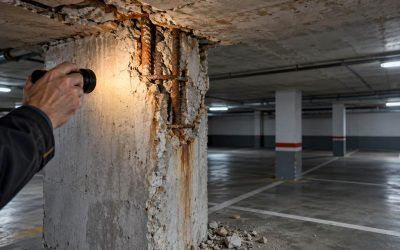
Structural Damage and Building Pathologies: What They Are, Examples and How to Claim Against the Building Contractor or Developer
A crack that widens every winter, a door that suddenly no longer closes, a floor slab that sags or a garage with spalling concrete and exposed reinforcement. Behind many of these symptoms lie structural damage and building pathologies: defects that originate in the...
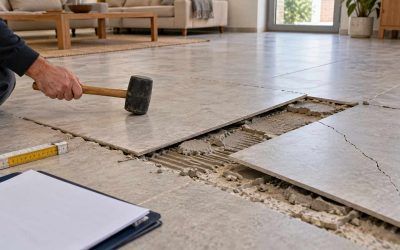
Building contractor ordered to pay over €25,000 for defective flooring in a home
The Civil Division of the Court of First Instance of Jaén (Tribunal de Instancia, Plaza nº 3) has handed down Judgment no. 396/2026, dated 29 September 2026, fully upholding the claim brought by the owners of a home against the building contractor responsible for the...
DON’T HESITATE TO CONSULT US!
CUSTOM BUDGETS

0 Comments