
Can I refuse to pay for poorly executed building work?

What happens if the building contractor claims the final instalment under the construction contract, but I do not agree because many things are wrong?
The contractual relationship arising from a construction contract is defined in article 1544 of the Civil Code: a contract whereby one of the parties undertakes to carry out works for a set price, where “works” is understood as the result of human activity. It is also defined as a bilateral contract whereby one party undertakes to pay remuneration or a price to the other for carrying out works.
The essential obligation of the client commissioning the works, or owner of the works, is therefore to pay the price. But a construction contract is bilateral: it creates reciprocal or synallagmatic obligations for both parties. The contractor or building contractor also has the obligation to carry out the works, with an obligation to achieve a result. In other words, it is not enough to hand them over in any condition. Each party is at the same time creditor and debtor of respective obligations, linked to each other by a relationship of reciprocity.
One of the effects of any reciprocal obligation is that if the creditor demands that the debtor perform the reciprocal obligation without having performed his own, the debtor may raise the so-called “exceptio non adimpleti contractus”, which is not expressly regulated in the Civil Code but derives from articles 1100, 1101 and 1124; it was created by the courts and has been repeatedly applied in the case law of the Supreme Court.
It means that if you have been handed over works in a defective condition but are required to pay in full, you may raise the Latin “exceptio non adimpleti contractus” (defence of non-performance of the contract) and/or the “exceptio non rite adimpleti contractus” (defence of defective or partial performance) on the grounds that the contractor has failed to meet its obligations. As established in the case law of the Supreme Court, defects in the works and the breaches of contract mentioned mean that the handover does not meet the owner’s legitimate expectations of receiving the works as contracted; therefore, since the contractor’s performance is defective and the obligations under the construction contract are reciprocal, the legal consequence is that the owner of the works is not obliged to perform his own obligation, and may seek termination of the contract or a reduction in the price in proportion to the defects in the work carried out.
If a building contractor is claiming the rest of the price from you, but you are not satisfied with the condition of the works, the best course of action is to commission an expert report from our technical department to certify and assess the defective condition of the works; our legal department will then use it to defend you and/or sue the contractor.
DPcon Reclamaciones Daños Constructivos.
Related articles

Drain smells and home drainage systems: why your home smells of sewage and how to claim if it is a new build
A sewage smell at home is one of the most unpleasant problems a property can have. It causes real concern because it is seen as something difficult to fix. That is not quite the case, but when it appears in the bathroom, in the kitchen or next to the washing machine,...
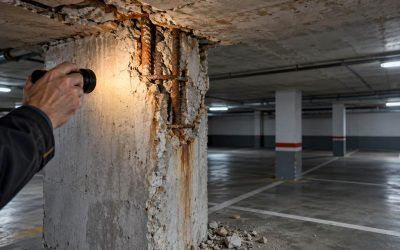
Structural Damage and Building Pathologies: What They Are, Examples and How to Claim Against the Building Contractor or Developer
A crack that widens every winter, a door that suddenly no longer closes, a floor slab that sags or a garage with spalling concrete and exposed reinforcement. Behind many of these symptoms lie structural damage and building pathologies: defects that originate in the...
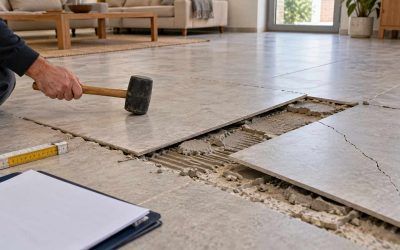
Building contractor ordered to pay over €25,000 for defective flooring in a home
The Civil Division of the Court of First Instance of Jaén (Tribunal de Instancia, Plaza nº 3) has handed down Judgment no. 396/2026, dated 29 September 2026, fully upholding the claim brought by the owners of a home against the building contractor responsible for the...
DON’T HESITATE TO CONSULT US!
CUSTOM BUDGETS

0 Comments