
Collateral damage (from one building to another)
Let us explain a specific scenario: suppose we have building A, whose construction, repair or renovation has caused damage to another adjoining building, B, because its foundations turned out to be inadequate, dragging the neighbouring building along as they gave way beyond normal limits and causing a differential settlement between the party wall and the affected property, with noticeable cracking and steadily worsening damage to it, or causing damage for some other reason, such as piling, micropiling, a basement, car parks, etc.
But with the added circumstance that the damage does not appear during the works. That is, at first nothing happens, and right after the works are finished nothing happens either, but over time – after 5 years, for example– owing to rain, etc., the cracks and damage described, or tilting, etc., begin to appear in the adjoining building.
But let us also combine this with the fact that the developer of building A, which caused the damage, is now insolvent, or is in insolvency proceedings (formerly known as suspension of payments); or its current owners and the present homeowners’ association have no funds.
In short, we want to shed light on what should be done in this apparent dead end, faced by Building B, which has serious damage, and B suspects that the damage originated when the adjoining building A was built or renovated, but five years have already passed and now no one seems to be responsible, because the developer has gone, the building contractor is no longer around either, and “it is said” that the damage would become time-barred after one year, and many more years than that have passed since building A was completed.
Well, no, that is not true: there is a way out.
The third party who suffers the damage (the owner in building B) may sue the architect (of building A) within the legal time limit. And that “legal time limit” refers to the time within which the defect must appear in order to be attributed to the technical professionals who took part in the construction that caused the damage; it refers to the 10-year guarantee period. However, the limitation period for bringing the action (for filing the lawsuit) is one year
If the works, the basement or the micropiling that caused the damage were carried out 5, 6 or even up to 10 years ago, the architect who directed the works on building A is liable, as is the architect’s insurer. For practical purposes, it is always 10 years as well, since this concerns damage affecting the structure and foundations. There is no point thinking in terms of 1 or 3 years, because defects in finishes or lack of habitability in building A can hardly damage building B.
That does not mean, however, that the one-year period should not apply when calculating the limitation period for the action of the affected third parties “from the moment the injured party became aware of it”.
To sum up, there is no doubt that the “legal time limit” referred to by the law is ten years, that is, Building B can claim if building A is less than 10 years old; and, from the moment the injured parties (those in building B) became aware of the damage, there is one year in which to file the lawsuit.
Related articles

Drain smells and home drainage systems: why your home smells of sewage and how to claim if it is a new build
A sewage smell at home is one of the most unpleasant problems a property can have. It causes real concern because it is seen as something difficult to fix. That is not quite the case, but when it appears in the bathroom, in the kitchen or next to the washing machine,...
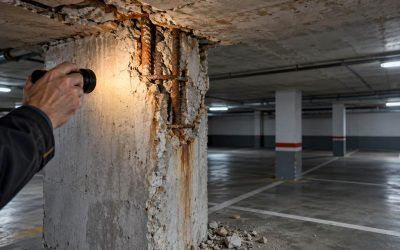
Structural Damage and Building Pathologies: What They Are, Examples and How to Claim Against the Building Contractor or Developer
A crack that widens every winter, a door that suddenly no longer closes, a floor slab that sags or a garage with spalling concrete and exposed reinforcement. Behind many of these symptoms lie structural damage and building pathologies: defects that originate in the...
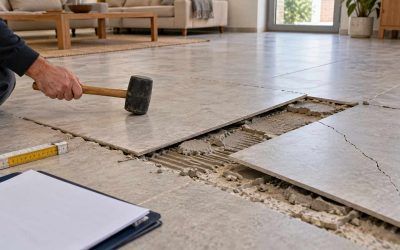
Building contractor ordered to pay over €25,000 for defective flooring in a home
The Civil Division of the Court of First Instance of Jaén (Tribunal de Instancia, Plaza nº 3) has handed down Judgment no. 396/2026, dated 29 September 2026, fully upholding the claim brought by the owners of a home against the building contractor responsible for the...
DON’T HESITATE TO CONSULT US!
CUSTOM BUDGETS

0 Comments