
Attributing liability to the developer

A developer is anyone who plays a decision-making role in the construction process as a professional in the property market, even on a non-profit basis, and whether the developer is public or private. The criterion that allows liability to be attributed to the developer is precisely the trust reasonably generated in purchasers regarding the suitability of a building that is the result of that market activity.
As we have indicated, in order to be a developer (and therefore to be liable as such) it is necessary to play a decision-making role in the construction process, so that someone who takes no decisions relating to the construction work is not a developer, however much they profit from the building. For example, a bank that merely finances the development is not a developer unless, in addition to financing it, the bank plays a decision-making role in it.
All of the above means that the developer, even if it has not physically worked on the construction (that is, it is simply a developer-seller), is always an unconditional guarantor of the building vis-à-vis the owners, whatever the cause of the construction defects. The developer is liable not only when it is impossible to individualise the cause of the defects or the share of liability attributable to each of those who contributed to the damage, but in all cases.
This was also the outcome of applying the case-law criteria on developer liability (the developer is held liable for construction defects due to a deficient ground study), (the developer is held liable because it is obliged to hand over the property it sells in a condition fit for its purpose).
In housing cooperatives the developer should be considered to be whoever takes the fundamental decisions in the construction process. If the governing board has granted powers to a third party for that purpose, that third party will be the developer. If there is no such manager (either because no one has been granted powers or because the scope of those powers excludes any decision on the fundamental acts of the construction process), the cooperative itself is the developer. In view of the definition of developer in article 9.1 of the LOE, which also applies that description to anyone acting collectively, the case-law doctrine that housing cooperatives bear no liability for ruin is no longer tenable.
Related articles

Drain smells and home drainage systems: why your home smells of sewage and how to claim if it is a new build
A sewage smell at home is one of the most unpleasant problems a property can have. It causes real concern because it is seen as something difficult to fix. That is not quite the case, but when it appears in the bathroom, in the kitchen or next to the washing machine,...
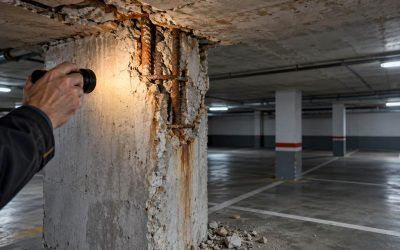
Structural Damage and Building Pathologies: What They Are, Examples and How to Claim Against the Building Contractor or Developer
A crack that widens every winter, a door that suddenly no longer closes, a floor slab that sags or a garage with spalling concrete and exposed reinforcement. Behind many of these symptoms lie structural damage and building pathologies: defects that originate in the...
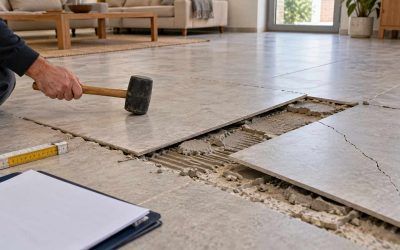
Building contractor ordered to pay over €25,000 for defective flooring in a home
The Civil Division of the Court of First Instance of Jaén (Tribunal de Instancia, Plaza nº 3) has handed down Judgment no. 396/2026, dated 29 September 2026, fully upholding the claim brought by the owners of a home against the building contractor responsible for the...
DON’T HESITATE TO CONSULT US!
CUSTOM BUDGETS

0 Comments