
Do you have to sue all the parties involved in the construction?

Do you have to sue all the parties involved in the construction when bringing a legal claim for defects in a home?
No compulsory joinder of defendants
Once a lawsuit has been filed against the parties involved in the construction whom the expert report has identified as “liable” for the defects in the home, it is quite common for the defendants to ask for other parties involved in the construction (architects, quantity surveyors, the building contractor, subcontractors…) to be brought in, by requesting “compulsory joinder of defendants” (litisconsorcio pasivo necesario). This is because each party considers that it is not responsible and blames the other professionals instead. So, do you have to sue them all?
The case law of the Supreme Court has resolved this question, denying that it is necessary to sue everyone, on two grounds:
*On the one hand, the injured party is free to sue whichever party or parties it sees fit, the only drawback being that if, after proceedings have been brought against a particular person, the evidence leads to the conclusion that that person is not liable, they will be acquitted; otherwise, they will be found liable.
* On the other hand, the reasoning is that, where it is not possible to establish the specific fault of each party involved in the construction of the defective building, the ten-year liability is joint and several, and one of the typical effects of joint and several obligations, under article 1144 of the Civil Code, is that “the creditor may proceed against any of the joint and several debtors or against all of them simultaneously“. This approach is reinforced by stating that a judgment declaring joint and several liability and ordering the sole defendant to pay does not prejudge the internal relationship between the jointly and severally liable parties, which will be dealt with as a separate matter between the various obligors, under article 1145.
Third-party joinder requested by other defendants.
That said, through the mechanism of “third-party joinder” (intervención provocada) permitted by the Civil Procedure Act (LEC) in these cases, the defendants can sometimes force other parties to be brought into the proceedings so that the case is not decided in their absence, since the judgment could affect them. In that case, the claimant may either object to the participation of those other parties involved in the construction, or accept it and extend the lawsuit to include them.
For this reason, claimants are under no obligation to sue all of the many parties involved in the works from the outset – quantity surveyor, subcontractors, suppliers, etc. – without prejudice to whatever may be decided in the proceedings.
If you have any questions, consult us.
Related articles
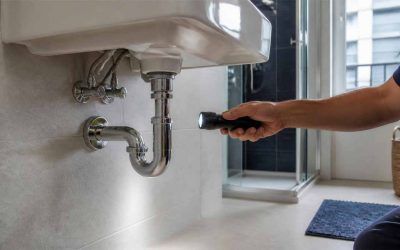
Drain smells and home drainage systems: why your home smells of sewage and how to claim if it is a new build
A sewage smell at home is one of the most unpleasant problems a property can have. It causes real concern because it is seen as something difficult to fix. That is not quite the case, but when it appears in the bathroom, in the kitchen or next to the washing machine,...
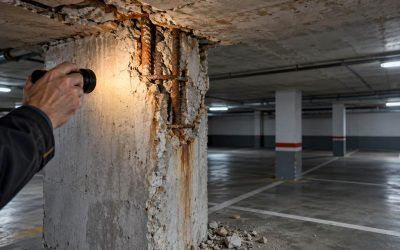
Structural Damage and Building Pathologies: What They Are, Examples and How to Claim Against the Building Contractor or Developer
A crack that widens every winter, a door that suddenly no longer closes, a floor slab that sags or a garage with spalling concrete and exposed reinforcement. Behind many of these symptoms lie structural damage and building pathologies: defects that originate in the...
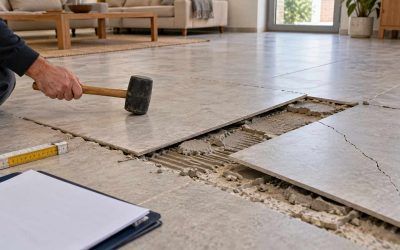
Building contractor ordered to pay over €25,000 for defective flooring in a home
The Civil Division of the Court of First Instance of Jaén (Tribunal de Instancia, Plaza nº 3) has handed down Judgment no. 396/2026, dated 29 September 2026, fully upholding the claim brought by the owners of a home against the building contractor responsible for the...
DON’T HESITATE TO CONSULT US!
CUSTOM BUDGETS

0 Comments