
Garage flooring breaking down

It is not acceptable for garage flooring to deteriorate until its surface layer is lost simply through everyday use or cleaning
Lack of maintenance or insufficient maintenance cannot go beyond cleaning, and it is neither reasonable nor acceptable for the garage floor to deteriorate until it loses its surface layer because of a cleaning machine of the kind normally used to sweep large areas such as a garage. What the design normally specifies for the garage flooring is power-floated concrete(*). But if it is executed defectively, liability for the damage will lie with the building contractor, the technical architect or site manager, and the developer, the latter being jointly and severally liable. When the garage floor shows tyre marks, loss of the concrete’s surface layer, cracks and thick dust, this damage is neither inherent nor normal; the reality is that the flooring is defective. Indeed, the concrete used lacks strength, and to see this one need only check that the newly built flooring has a multitude of tyre marks and loss of material. It is not normal for garage flooring to be unable to withstand the forces it should be designed for, such as the force of a moving vehicle or a cleaning machine. This damage does not occur immediately after the homes are handed over; it is usually continuing damage that appears little by little with the use of the garage flooring, which deteriorates from the handover of the building onwards. The more homes that are occupied, the more cars will use it, and so the greater the deterioration. It was the site manager (technical architect or quantity surveyor) who took on the technical role of directing the physical execution of the works and of controlling the construction, and the quality of what was built, both qualitatively and quantitatively. The building contractor is also liable, as it answers directly for material damage caused to the building by defects arising from lack of skill, lack of professional or technical capacity, negligence or breach of the obligations assigned to the site supervisor and to any other individuals or companies that depend on it. If the contractor subcontracted the power floating, that is, the execution of the garage flooring, to other individuals or companies, it will be directly liable for material damage caused by defects in its execution. There is no doubt that the garage is a building element and, as one of the building’s facilities, it must be usable satisfactorily. But the damage described is a defect in the flooring, not damage caused by lack of maintenance or inappropriate cleaning. The presence of tyre marks, cracks and loss of the flooring’s surface layer, with aggregate or gravel exposed, affects the functionality of that element. If the power-floated concrete does not have the required mechanical strength, since the flooring loses substance (shedding it as dust) when subjected to forces it should be designed to withstand, then this is damage affecting an element as important as the garage floor, and it is due to a defect in the composition of the building element, probably because the necessary additives were not included during its preparation or the mix proportions were not correct. This defect means that the garage cannot be used as satisfactorily as it should, and this affects the habitability of the building under article 3 of the same Act. (*)Power floating is usually carried out in three stages: first, the concrete is poured and spread; second, cement, quartz and sometimes coloured corundum are added; and third and finally, specialist machinery is applied so that the concrete forms a uniform, strong, smooth and durable surface (in construction trade slang, “the helicopter”). Power-floated concrete is used both indoors, in garages and industrial buildings, and outdoors, in courtyards, sports courts, external walkways around industrial buildings, etc.Related articles

Drain smells and home drainage systems: why your home smells of sewage and how to claim if it is a new build
A sewage smell at home is one of the most unpleasant problems a property can have. It causes real concern because it is seen as something difficult to fix. That is not quite the case, but when it appears in the bathroom, in the kitchen or next to the washing machine,...
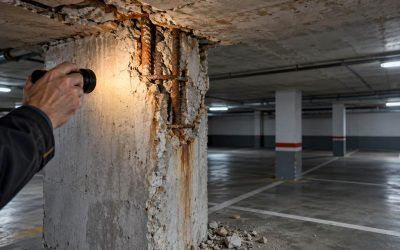
Structural Damage and Building Pathologies: What They Are, Examples and How to Claim Against the Building Contractor or Developer
A crack that widens every winter, a door that suddenly no longer closes, a floor slab that sags or a garage with spalling concrete and exposed reinforcement. Behind many of these symptoms lie structural damage and building pathologies: defects that originate in the...
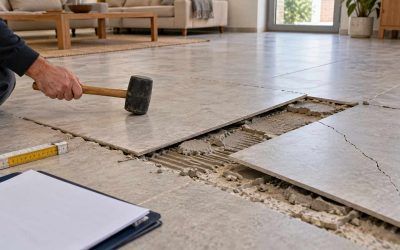
Building contractor ordered to pay over €25,000 for defective flooring in a home
The Civil Division of the Court of First Instance of Jaén (Tribunal de Instancia, Plaza nº 3) has handed down Judgment no. 396/2026, dated 29 September 2026, fully upholding the claim brought by the owners of a home against the building contractor responsible for the...
DON’T HESITATE TO CONSULT US!
CUSTOM BUDGETS

0 Comments