
Lack of soundproofing

A lack of proper sound insulation not only reduces quality of life but can even cause health problems
When buying a home, you should check that the soundproofing keeps noise at an acceptable level, since a lack of soundproofing is a serious problem for the occupants.
This problem defeats the purpose of buying a home, because it is ultimately a less “habitable” home. Let us not forget that the home is where the individual and the family exercise their most intimate freedom (Constitutional Court judgment 171/1999, RTC 1999,171).
Noise can become a psychopathogenic factor with harmful consequences for people, such as sleep disturbance, neurosis or aggressive tendencies, and people must therefore be protected against excessive noise or poor insulation in their homes.
Sound insulation defects can, like many others, be claimed from those responsible; the difference lies in how difficult it is to prove these shortcomings.
The judge must be convinced that these defects are real. But a sound insulation deficiency is not as easy to demonstrate with a photograph as a crack or damp. An acoustic deficiency cannot be photographed, and so the defendants will always dispute it.
That is why the same questions always arise: must the report and tests be carried out “in situ”? Should a laboratory test have been used? It is also important to check that the material used complies with the applicable soundproofing regulations. But do exploratory openings have to be made to certify whether or not the materials used were suitable? Or is it enough to prove that the home is poorly insulated because, when the works were carried out, the solution specified in the Project was replaced with a less effective type of soundproofing? If, for example, the sound insulation was designed with solid brick half a brick thick (½ foot) with a cavity, and it is proved that this insulation was not installed, or that a different type of brick (hollow brick) was used, this failure is not merely a breach of contract but must be classed as a defect.
Without claiming to analyse the subject exhaustively, our own view is that, obviously, whether a court claim for acoustic defects is viable depends very much on the evidence.
We therefore recommend the following to prove that such pathologies exist:
- On-site testing.
- Laboratory testing
- Exploratory openings that reveal differences between what was designed and what was built. And confirmation that the project specified a particular material for the party walls (e.g. solid brick half a brick thick), whereas the opening has shown that a different material was used (hollow brick), resulting in insufficient insulation.
You can tell us about your case so that we can study it and advise you, free of charge and with no obligation.
Related articles
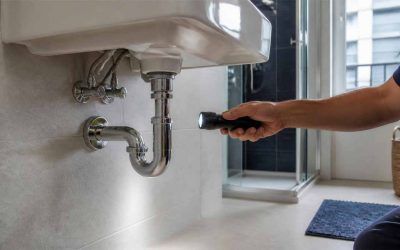
Drain smells and home drainage systems: why your home smells of sewage and how to claim if it is a new build
A sewage smell at home is one of the most unpleasant problems a property can have. It causes real concern because it is seen as something difficult to fix. That is not quite the case, but when it appears in the bathroom, in the kitchen or next to the washing machine,...
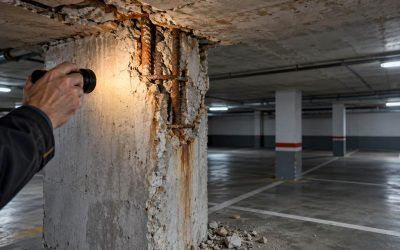
Structural Damage and Building Pathologies: What They Are, Examples and How to Claim Against the Building Contractor or Developer
A crack that widens every winter, a door that suddenly no longer closes, a floor slab that sags or a garage with spalling concrete and exposed reinforcement. Behind many of these symptoms lie structural damage and building pathologies: defects that originate in the...
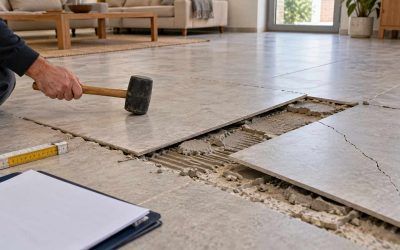
Building contractor ordered to pay over €25,000 for defective flooring in a home
The Civil Division of the Court of First Instance of Jaén (Tribunal de Instancia, Plaza nº 3) has handed down Judgment no. 396/2026, dated 29 September 2026, fully upholding the claim brought by the owners of a home against the building contractor responsible for the...
DON’T HESITATE TO CONSULT US!
CUSTOM BUDGETS

0 Comments