
New mandatory regulations for lifts

New requirements for lift installation from 1 September 2017
As a result of the transposition into Spanish law of the European Lifts Directive 2014/33/EU, which lays down new requirements for the construction, design and installation of lifts in Europe, the regulations on lifts have changed considerably. In Spain, this legislation has been incorporated into standards EN 81-20 and EN 81-50, which have been mandatory since 1 September 2017 for all new lifts, replacing the old 1998 regulations.
The new lift standards set requirements for the shaft walls, floor and ceiling. Safety and materials are improved. Inspections are stricter. In short, the regulations have changed considerably.
The new standards provide a more detailed and demanding definition of the requirements the shaft walls, floor and ceiling must meet; the safety features of lift cars, and they also affect, for example, the glass, which must be laminated. The new standards will improve safety by incorporating technological advances in both manufacturing and commissioning, as well as rules for the design, calculation, inspection and testing of lift components. In the interests of greater safety, the inspections and tests used to check them are becoming stricter. Specifically, some of the new features are:
- Requirements concerning unintended car movement and overspeed in the upward direction.
- Door safety (photosensitive anti-closing sensor).
- Car door locking (preventing the doors from opening when the lift is not at a floor)
- Car materials specifically made to resist fire.
- Rigidity of the car walls and of the car and landing doors.
- Lighting of the car and shaft.
- Improvements in safety of all kinds for maintenance technicians.
Therefore, all lifts installed and legalised from now on (and previously, provided it was after 31 August 2017) must comply with the new regulations, and from that date it will not be possible to legalise any installation under the previous regulations.
Related articles
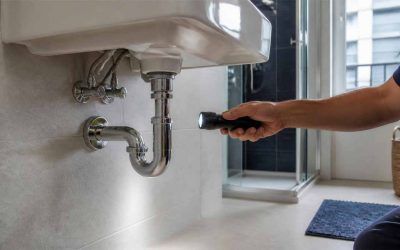
Drain smells and home drainage systems: why your home smells of sewage and how to claim if it is a new build
A sewage smell at home is one of the most unpleasant problems a property can have. It causes real concern because it is seen as something difficult to fix. That is not quite the case, but when it appears in the bathroom, in the kitchen or next to the washing machine,...
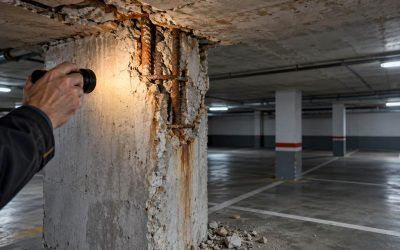
Structural Damage and Building Pathologies: What They Are, Examples and How to Claim Against the Building Contractor or Developer
A crack that widens every winter, a door that suddenly no longer closes, a floor slab that sags or a garage with spalling concrete and exposed reinforcement. Behind many of these symptoms lie structural damage and building pathologies: defects that originate in the...
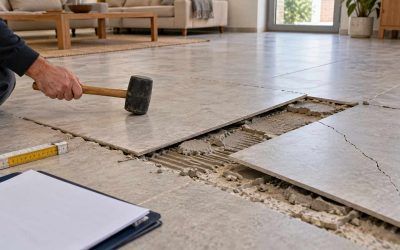
Building contractor ordered to pay over €25,000 for defective flooring in a home
The Civil Division of the Court of First Instance of Jaén (Tribunal de Instancia, Plaza nº 3) has handed down Judgment no. 396/2026, dated 29 September 2026, fully upholding the claim brought by the owners of a home against the building contractor responsible for the...
DON’T HESITATE TO CONSULT US!
CUSTOM BUDGETS

0 Comments