
Which materials are best for sound insulation.

Different materials and the sound insulation they achieve.
As we explained in a previous post, to comply with the relevant acoustic regulations of the Technical Building Code (CTE), the designer must refer to the Basic Document on Protection against Noise. It covers everything relating to sound insulation, which depends on the type of rooms and on whether they belong to the same unit of use.
These regulations state that, as regards the design and sizing of the building elements that provide the necessary sound insulation between different rooms, one of two options may be chosen: the simplified or the general option, set out in sections 3.1.2 and 3.1.3 respectively of the Basic Document on Protection against Noise.
The simplified option sets out combinations of building elements that meet the objectives of the CTE. It takes all transmission paths into account, but in a simplified way, specifying flanking elements that are “sufficiently” good not to degrade the insulation, so that the result stays within the limits imposed by the CTE.
By contrast, the general option performs a detailed calculation and compares the result with the CTE requirements. Even so, the general option is usually more flexible in terms of requirements.
Below are the building materials normally used in façades and partitions and the airborne sound insulation values they tend to achieve, bearing in mind that these may vary depending on how they are installed.
- Façades:
For façade insulation, if half-brick facing brickwork is used, with no cavity or with an unventilated cavity, the insulation will be just under 50 dBA. However, if a build-up of half-brick facing brickwork, ventilated cavity, insulation and an inner leaf with plaster is used, sound insulation of 50 dBA or more can be achieved.
Obviously the insulation will vary if the composition of the wall changes slightly: whether or not it has an inner leaf, whether the inner face of the outer brick is rendered, or whether concrete or clay blocks are used. Depending on these variations, values range between around 48 and 62 dBA.
But if the façade is lightweight, made up of mechanically fixed external cladding, a ventilated cavity, insulation and an inner leaf (plasterboard or cement board), the insulation achieved is around 43 to 47 dBA.
Façades of precast concrete panels: in these cases the sound insulation achieved is around 50 to 60 dBA, depending on whether the panel is solid or lightweight, the width of the cavity and the inner leaf, which may be hollow clay brick or plasterboard.
GRC panel façades. Micro-concrete panels with glass fibre: airborne sound insulation would be around 55 dBA.
- Partition walls or party walls:
In interior partitions the elements tend to be simpler and depend on whether it is a party wall or a partition wall within our own home or one adjoining another home.
A double hollow brick partition with plaster on both faces would be the simplest case of separating partition, giving insulation of barely 36 dBA.
One-brick-thick perforated clay brick. With a build-up of perforated clay brick plastered on both faces, the airborne sound insulation would be around 49 dBA.
If a reinforced concrete leaf has been used, it will depend greatly on its thickness: at about 12 cm the insulation may be around 52 dBA; with a thickness of 20 cm, insulation of 55 dBA is achieved.
If the partition has two leaves, it may be made of:
- Two double hollow bricks, with rock wool insulation inside and plaster on both faces, achieving insulation against 44 dBA of airborne noise.
- Two-leaf concrete block partition. In this case the insulation can reach 48 dBA.
That said, these are only theoretical estimates: even where these construction solutions have been designed, the result will not necessarily match those values or comply with the insulation required by the Basic Document on Protection against Noise, because something was changed or the work was carried out incorrectly. If you have any doubts about whether the walls of your home fail to provide the required sound insulation, the best course is to commission an expert report and, if they do not comply and you are within the habitability guarantee period provided for in the LOE, to claim against those responsible.
DPcon Reclamación Daños constructivos.
Related articles
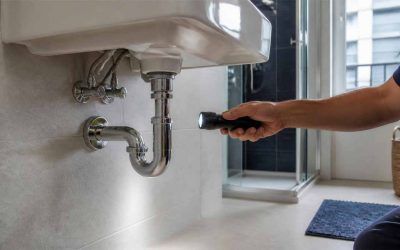
Drain smells and home drainage systems: why your home smells of sewage and how to claim if it is a new build
A sewage smell at home is one of the most unpleasant problems a property can have. It causes real concern because it is seen as something difficult to fix. That is not quite the case, but when it appears in the bathroom, in the kitchen or next to the washing machine,...
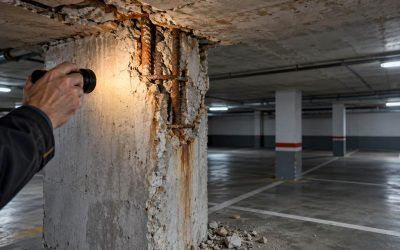
Structural Damage and Building Pathologies: What They Are, Examples and How to Claim Against the Building Contractor or Developer
A crack that widens every winter, a door that suddenly no longer closes, a floor slab that sags or a garage with spalling concrete and exposed reinforcement. Behind many of these symptoms lie structural damage and building pathologies: defects that originate in the...
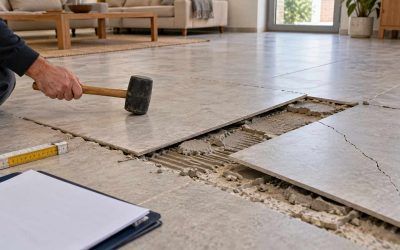
Building contractor ordered to pay over €25,000 for defective flooring in a home
The Civil Division of the Court of First Instance of Jaén (Tribunal de Instancia, Plaza nº 3) has handed down Judgment no. 396/2026, dated 29 September 2026, fully upholding the claim brought by the owners of a home against the building contractor responsible for the...
DON’T HESITATE TO CONSULT US!
CUSTOM BUDGETS

0 Comments