
The one per cent. By Francisco Moya

Clients often ask us: what if the lawsuit is lost? Will we have to pay the legal costs? What chance is there of the claim being dismissed entirely with an order to pay legal costs?
The honest answer is: if a lawyer guarantees that a case is a sure win, they are lying. There is always some remote possibility of losing. It is as if, when a patient goes into the operating theatre, the doctor guaranteed them one hundred per cent certain success. Never. However simple the operation, and however many times the surgeon has performed it successfully, there can always be an intolerance to the anaesthetic… unexpected complications, who knows. Nobody can guarantee 100%.
All we say is that, based on our experience and from our own statistical point of view, 99% of cases are won, either in full or at least in part. But there is always that other one per cent in reserve, in case one is lost.
As we have many years in the profession, and have handled hundreds of construction defect cases, today we will deal with the residual 1%. What happened in that case? And why was it lost, and with costs?.
Let me tell you. I once handled a case involving a villa with enormous cracks on an urbanisation; it had caved in, collapsed. It was frightening just to look at. The owner and client was a rather elderly foreign gentleman, married to a lady even older than him, with whom he was, by all accounts, very much in love. The case was straightforward: the architect and all the parties involved in the construction had been identified; we were within the guarantee period; it was easy to prove that the only solution was not to repair it but to knock it down and build a new one, and if compensation was to be paid, then to value the cost of doing so.
Seems under control, doesn’t it? Well, no. What happened, happened.
The client and his wife spent long periods abroad, before and during the lawsuit, and I had the keys to the villa. While the lawsuit went on, I requested, among other evidence, a judicial inspection. Besides, the judge was keen to see for himself whether the spectacular photographs in the case file were true. With a simple visit and a quick look, the judge would grasp the situation. So off we went, the court officials, the parties with their lawyers and court representatives, after lunch, at around 4 in the afternoon.
Only I knew where the villa was, on an urbanisation lost high up a mountain. I remember that when we arrived someone felt queasy and we stopped at a bar for a drink, practically next to the villa.
Drinks finished, we went to see the ruined villa, and it wasn’t there! It was impossible that I had got it wrong; I knew I had been there, but it was gone. In the row where it was supposed to be there were other, different villas, brand new, with no cracks at all, and they looked nothing like the one in the case. In my enormous bewilderment, I did not know what to say to the Judge. We knocked at the villas near where the house in question was supposed to be, also owned by foreigners, and nobody was in. Finally I knocked at one, possibly the most gleaming, the newest, and my client opened the door.
We explained our bewilderment, the reason for the visit, our nerves, our “disappointment”, but the good gentleman, as calm as could be, explained to us:
That he was very much in love with his wife who, as I knew, was ten years older than him. That, as she was about to turn 90, he thought the best birthday present for such an occasion would be to practically knock the house down and rebuild it as new, so that his wife could enjoy it as a gift on that special day, as a surprise. To that end he disappeared from Spain with her, off on a Mediterranean cruise. He had rebuilt practically the whole thing in three months, to be in time…, but unfortunately it was not to be. The poor woman died before seeing her devoted husband’s surprise. Which explained his conduct.
That was all.
I translated his words for the Judge and, without a word, the whole party left. In the judgment, the claimant was ordered to pay legal costs and lost the case –there was nothing left to repair-, and the judge reproached the gentleman for not having had the courtesy to tell his lawyer beforehand about his legitimate and tender plans.
That is the one per cent that breaks the 100%.
Francisco Moya. Lawyer, member of the Bar since 1975. Founding partner of DPcon S.L.
www.dpcon.es
Related articles

Drain smells and home drainage systems: why your home smells of sewage and how to claim if it is a new build
A sewage smell at home is one of the most unpleasant problems a property can have. It causes real concern because it is seen as something difficult to fix. That is not quite the case, but when it appears in the bathroom, in the kitchen or next to the washing machine,...
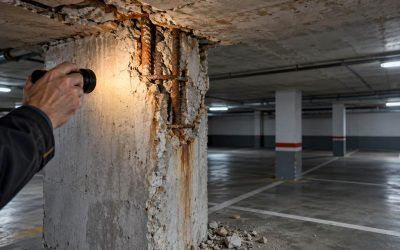
Structural Damage and Building Pathologies: What They Are, Examples and How to Claim Against the Building Contractor or Developer
A crack that widens every winter, a door that suddenly no longer closes, a floor slab that sags or a garage with spalling concrete and exposed reinforcement. Behind many of these symptoms lie structural damage and building pathologies: defects that originate in the...
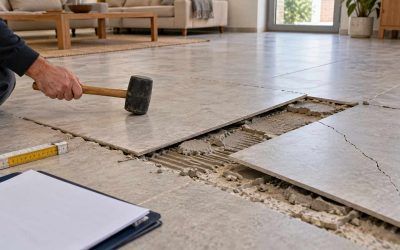
Building contractor ordered to pay over €25,000 for defective flooring in a home
The Civil Division of the Court of First Instance of Jaén (Tribunal de Instancia, Plaza nº 3) has handed down Judgment no. 396/2026, dated 29 September 2026, fully upholding the claim brought by the owners of a home against the building contractor responsible for the...
DON’T HESITATE TO CONSULT US!
CUSTOM BUDGETS


0 Comments