
Who has to repair leaks affecting some owners in a shared garage association?

We have been asked, in the case of a shared garage association (mancomunidad de garajes) set up for garages shared by two homeowners’ associations, where water ingress has been found affecting several parking spaces and storage rooms belonging to one particular homeowners’ association, who should be liable for this damage: one homeowners’ association, the other, or the shared garage association.
The homeowners’ association’s maintenance obligation.
First, we should remember that article 10.1 of the Horizontal Property Act (LPH) 49/1960 of 21 July, in paragraph a), establishes that the work and building works necessary for proper maintenance are compulsory, as is compliance with the duty to preserve the property and its communal services and installations, including in all cases those needed to meet the basic requirements of safety, habitability and universal accessibility.
In this respect, case law has held that, where leaks or flooding result from the poor upkeep of the building and its installations (even if shared with other buildings), particularly when the owner has drawn attention to that poor condition, article 1907 of the Civil Code applies (Supreme Court judgments of 20 April 1993 and, more recently, of 1 July 2000), and the homeowners’ association is only released from liability where the negligent involvement of a third party is proven and nothing can be held against the association’s conduct, or where its conduct played no causal role (Supreme Court judgment of 19 December 2006).
In other words, the homeowners’ association of the affected owners must indeed be responsible for maintaining and repairing the source of the leaks, without prejudice to the right of recourse or to claiming, where appropriate, against the shared garage association, the water utility concession holder or whoever it may be.
In addition, in the case in question, an “ad hoc” easement had clearly been created over the use of the garage and the contribution to its costs up to a certain physical limit (up to the two doors giving access to the storage rooms and to the exit of each building, which is precisely where the leak had occurred), so what was agreed in the easement will prevail over everything else.
If you have any questions, contact us.
Related articles
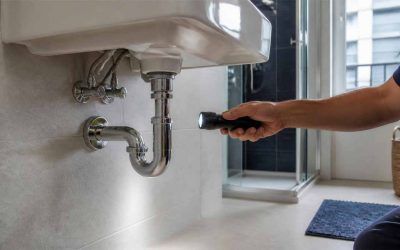
Drain smells and home drainage systems: why your home smells of sewage and how to claim if it is a new build
A sewage smell at home is one of the most unpleasant problems a property can have. It causes real concern because it is seen as something difficult to fix. That is not quite the case, but when it appears in the bathroom, in the kitchen or next to the washing machine,...
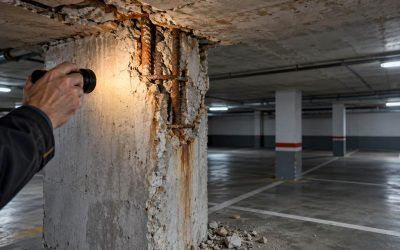
Structural Damage and Building Pathologies: What They Are, Examples and How to Claim Against the Building Contractor or Developer
A crack that widens every winter, a door that suddenly no longer closes, a floor slab that sags or a garage with spalling concrete and exposed reinforcement. Behind many of these symptoms lie structural damage and building pathologies: defects that originate in the...
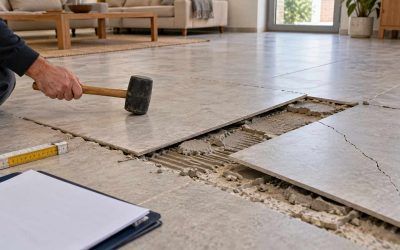
Building contractor ordered to pay over €25,000 for defective flooring in a home
The Civil Division of the Court of First Instance of Jaén (Tribunal de Instancia, Plaza nº 3) has handed down Judgment no. 396/2026, dated 29 September 2026, fully upholding the claim brought by the owners of a home against the building contractor responsible for the...
DON’T HESITATE TO CONSULT US!
CUSTOM BUDGETS

0 Comments